If Someone Were to Give Me a Mountain
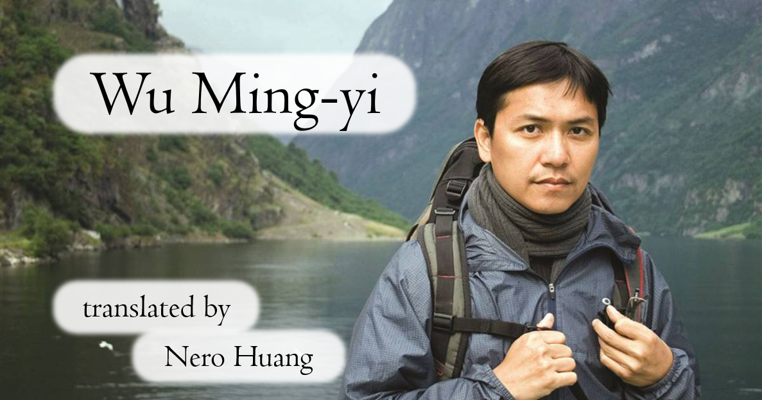
Wu Ming-yi
If someone were to give me a mountain,
I’d be willing to pay them with names of all the butterflies.
But I do not know the names of all the butterflies.
To repay them I must go searching.
The names of butterflies are shadow, dream, mysticism, and form—
and with each name found in the mountain,
I forget a little of my own name.
To find names of butterflies
you must find Meliosma rhoifolia and Formosan buckthorns
racing all over the mountain
The fluttering Asian water-willows and hairy swallow-worts,
the reclusive Formosan raspberries and stiff-leaved meliosmas,
golden-and-silver honeysuckle, sinuate-leaf tickclovers,
Japanese prickly-ashes, big‑leaf taxillus that belong in fairytales.
You’ll want to meet butterfly lilies
and hope to find wild turmeric along the stream.
Our melancholy is turmeric-gold,
while Chinese rain bells, green shrimp plants,
and fire-mark knotweeds live in sunlight
veined figs in the wind.
If someone were to give me a mountain,
all the water would come
from streams,
from the sky,
from the cracks between sand and sand,
and from kisses.
Reservoirs are hypothetical sentences that never come true
and I would allow you to weep.
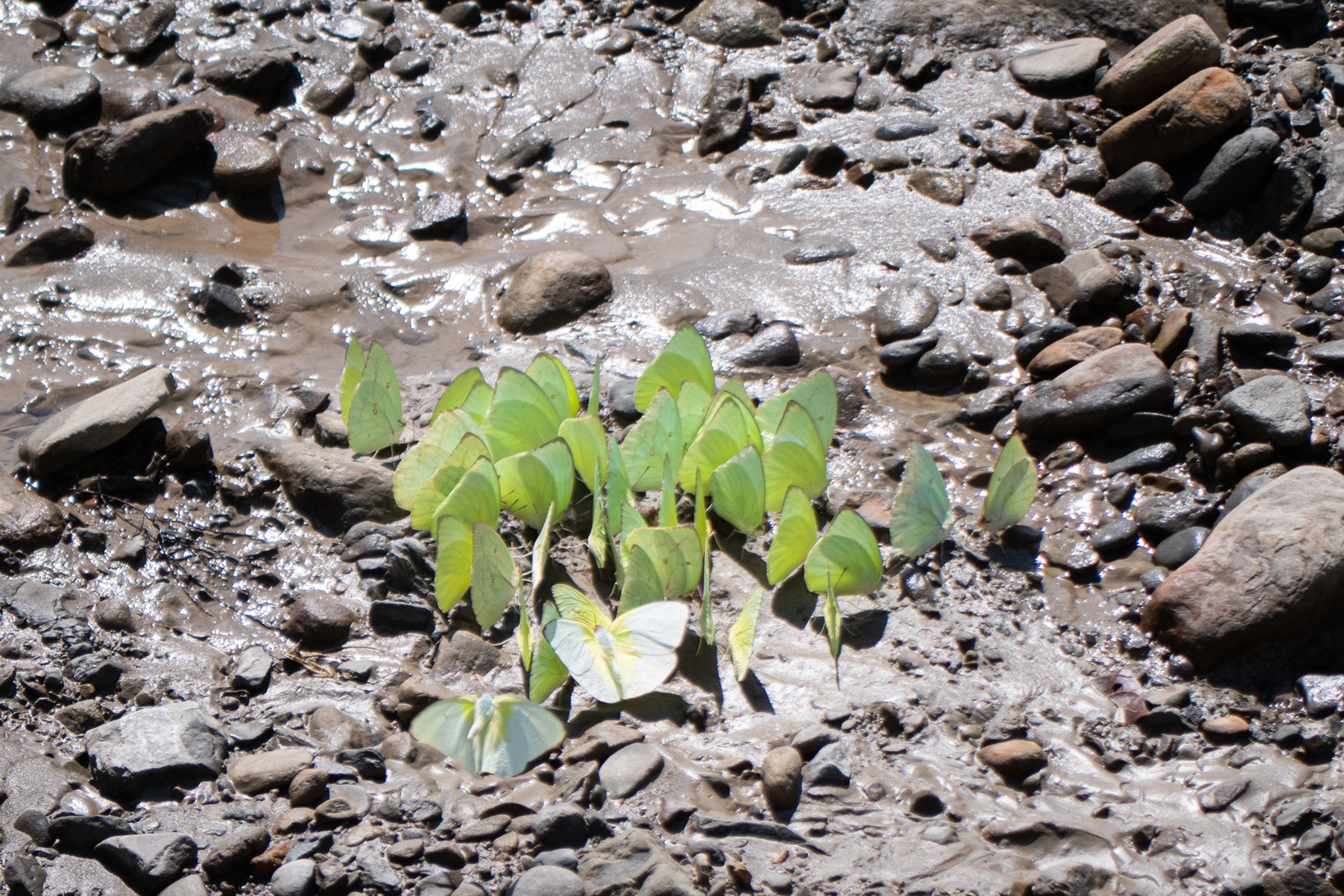
If that mountain you gave me
is filled with lemon migrants
you will miss it no matter where you go
because in this world
everyone is always on the road
Bearing your steelwood cassias down the road
you might slash your heart
each time you long for that mountain home
And if someone were to tell me
all the names of all the butterflies
please forgive me
for turning them away, firmly
For mountains are always borrowed
and I wish to forget my own name
Click to show notes.
Translator’s Note on botany
Many of the plant species featured in the poem are known larval host plants for specific butterflies. In the original text, the plants are referenced using their vernacular names laden with symbolic meaning and metaphor. In translating these, the translator made deliberate choices that adhered to the following principles:
- Common names are used preferentially when the plant has an established and recognized common name.
- If no widely known common name is available, the Latin botanical name is retained, or a resonant name is created.
- All translated names are chosen to reflect and preserve the poem’s original imagery, while remaining accessible to the reader and preserving a sense of musicality.
- Meliosma rhoifolia Maxim (山豬肉):
Host plant for the Choaspes benjaminii and the Dichorragia nesimachus. As there is no established English common name, the Latin Meliosma rhoifolia is retained. Being the first plant mentioned in the poem, this usage also reflects the poem’s thematic progression, from specificity toward anonymity and dissolution of naming.
- Rhamnus formosana Matsum (桶鉤藤 / 鼠李):
Host of the Eurema blanda arsakia. The common name Formosan Buckthorn is adopted, following the nomenclature used by the National Museum of Natural Science in Taiwan, reflecting the regional context.
- Justicia gendarussa (尖尾鳳):
Translated as Asian Water Willow to highlight both its geographic specificity.
- Vincetoxicum hirsutum (formerly Tylophora ovata, 鷗蔓):
A host for the Parantica sita niphonica. Translated as Hairy Swallow-worts, with Hairy reinforcing the ‘fluttering’ imagery in the line.
- Rubus formosensis (台灣懸鉤子):
Host plant for the Abraximorpha davidii and Sinthusa chandrana. Rendered as Formosan Raspberry to maintain the poem’s regional texture.
- Meliosma rigida (筆羅子):
Translated as Stiff-leaved Meliosma, with stiff-leaved echoing ‘the reclusive’.
- Lonicera japonica (忍冬):
Host to Limenitis sulpitia and Parasarpa dudu jinamitra. Rendered as Golden-and-silver Honeysuckle to evoke the colour and fairy-tale quality in the line ‘belong in fairytales’.
- Ototropis sequax (formerly Desmodium sequax, 波葉山螞蝗):
Host for the Neptis hylas. Translated as Sinuate-leaf Tickclover, following the nomenclature used by the National Museum of Natural Science in Taiwan, with the term Tick echoing ‘belong in fairytales’.
- Zanthoxylum ailanthoides (食茱萸):
A swallowtail host. Rendered as Japanese Prickly-Ash, echoing Hedychium coronarium, a Japanese-associated plant later in the stanza.
- Taxillus liquidambaricolus (楓寄生):
Presumed to be the mistletoe parasitic on maple trees. Translated as Big-leaf Taxillus, where big-leaf poetically captures ‘大葉’ and complements the ‘belong in fairytales’ motif.
- Hedychium coronarium (穗花山奈):
Commonly known as wild ginger lily and a host of Notocrypta curvifascia. Rendered as Butterfly Lily, reflecting the romantic imagery.
- Curcuma aromatica (郁金):
Likely a host for the Udaspes folus. Curcuma derives from Sanskrit and refers to turmeric. Translated as Wild Turmeric, where wild echoes the line about finding it ‘along the stream’.
- ‘Our melancholy is turmeric-gold’ (我們的憂鬱如金):
Translated as ‘turmeric-gold’ to preserve the metaphoric chain linking ‘憂鬱如金’ (gold-like melancholy), ‘郁金’ (Curcuma aromatica), and ‘毛薑黃’ (turmeric, Curcuma longa). In Chinese, ‘鬱’ and ‘郁’ both refer to ‘melancholy’.
- Strobilanthes cusia (馬藍):
Rendered as its common name Chinese Rain Bell, which supports the visual motif of ‘tear-shaped flowers’ (In Taiwanese, ‘馬賽’ is a homophone for ‘tears’), echoing to Fire-mark Knotweed later.
- Blechum pyramidatum (賽山藍):
Rendered as its common name Green Shrimp Plant, with ‘shrimp’ linking to ‘rain bell’, creating visual continuity.
- Persicaria chinensis (火炭母):
Commonly known as Chinese knotweed or creeping smartweed. I coined Fire-mark Knotweed, a neologism to vividly depict the red blotches typical of the plant, corresponding to the Chinese name ‘fire charcoal mother’. This translation also extends the sequence of imagery from ‘rain bell’ to ‘shrimp’ to ‘fire-mark’. The Latin name is noted at the end of the poem.
- Ficus nervosa (九重吹 / 九丁榕):
The Latin nervosa refers to nerves or vein-like patterns. Translated as Veined Fig, visually aligning with its leaf venation, linking both the emotional and physical metaphor in the subsequent line ‘you might slash your heart’.
- Senna siamea (鐵刀木):
Despite having multiple English names (e.g., Siamese Cassia, Kassod Tree, Pheasantwood, Yellow Cassia), none evoke the blade-like imagery of the original name. Therefore I coined Steelwood Cassia, a poetic neologism that reflects its metaphorical role in the poem as ‘the tree with which one slashes the heart’. The Latin name is provided in a footnote to the poem.
Translator’s Note
The translation was guided by the poet’s intention ‘to forget names’. Accordingly, the translator made the deliberate choice to gradually reduce the use of unnecessary punctuation and definite articles (such as ‘the’) as the poem progresses, thereby reflecting the poem’s expanding inner landscape.
The first two stanzas adopt a conversational tone to match the original poem’s initial dialogue-like cadence and inner flow, continuing until the line ‘Our melancholy is turmeric-gold...’
In the final two stanzas, the translator chose to omit punctuation altogether, to allow the language to draw closer to the poet’s internal monologue and emotional quality, and to reflect ‘I wish to forget my own name’ by letting the boundaries of language itself blur into openness.
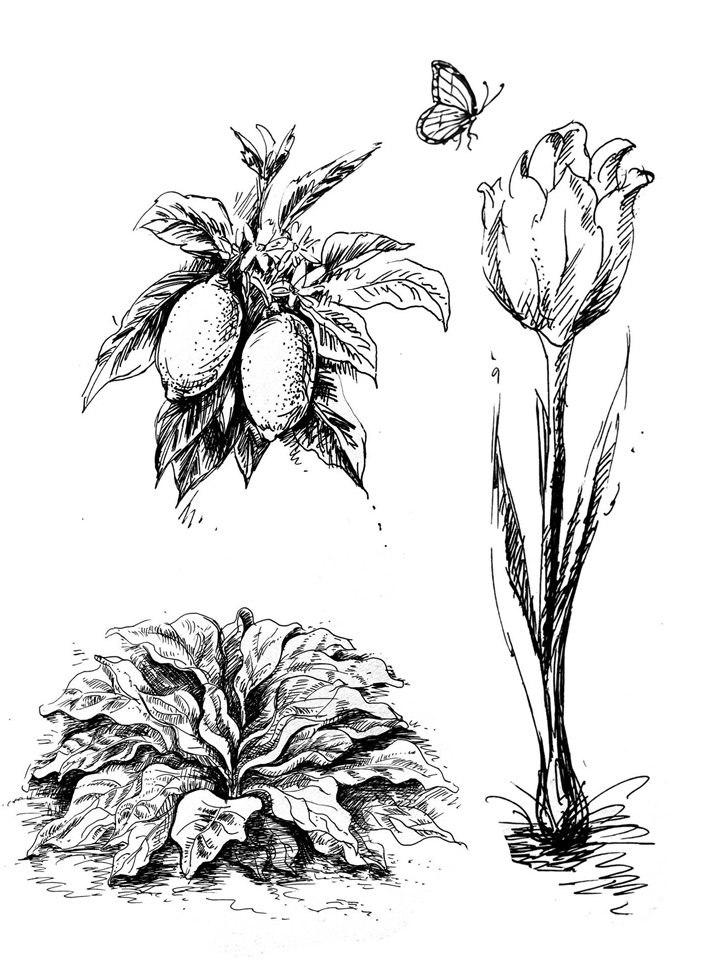
Illustration by Li Yiyang 李艺洋.
《如果有人要送我一座山》
吳明益
如果有人要送我一座山,我願意付給他所有蝴蝶的名字,但是我並不知道所有蝴蝶的名字。為了償還我得尋找它們。蝴蝶的名字是陰影、夢想、神秘主義和形式,每找到一個就會在山裡忘記自己的名字一點點。
為了找到蝴蝶的名字你得找到滿山跑動的山豬肉鼠李,會飛的尖尾鳳鷗蔓,隱士般的懸鉤子筆羅子,可以寫在童話裡的忍冬山螞蝗食茱萸楓寄生,你會想遇到穗花山奈並且在溪邊撿到郁金。
我們的憂鬱如金,而馬藍賽山藍火炭母在陽光裡,九重吹在風裡。
如果有人要送我一座山,所有的水都會來自溪流、天空、砂和砂之間的縫隙,以及吻;水庫是不會實現的假設語句,而且我會允許你流淚。
如果你給我的那座山啊,都是檸檬色的遷徙者,你會走到哪裡都想念那座山,因為這世界每個人都在路上。扛著你的鐵刀木啊在路上,想念故鄉的山就往心口砍一刀。
如果有人要告訴我所有蝴蝶的名字,請原諒我狠心地拒絕。因為山總是借來的,而我想忘記自己的名字。



Comments
There are no comments yet.