Cindy M. Carter

Freelance Translator

Beijing, China

contact

Cindy M. Carter is a Beijing-based translator of Chinese fiction and film. She studied economics, political science and Japanese at U.C. San Diego and lived in Osaka for three years before coming to China as a language student in 1996. Since beginning her translation career in 1999, she has translated over 40 award-winning independent Chinese films and documentaries, dozens of scripts, short stories, essays and poems and 2 novels. As one of the co-founders of Paper Republic, she was the recipient of a 2008 British Arts Council grant.

Fiction

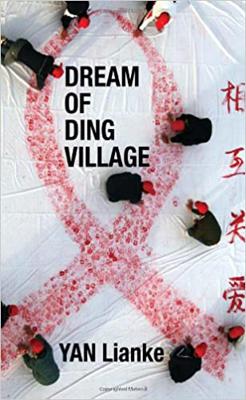
Dream of Ding Village by Yan Lianke. Forthcoming, early 2011. Constable and Robinson, U.K. Approx 300 pages. Prose-poetic tale of blood-selling, AIDS, profiteering and revenge set in rural Henan.

"But the sickness had only just begun. [...] The real explosion wouldn't come until next year, or the year after next. That's when people would start dying like sparrows, or moths, or ants. Right now they were dying like dogs, and everyone knows that in this world, people care a lot more about dogs than they do about sparrows, moths or ants."

Village of Stone by Guo Xiaolu. 2004. Chatto & Windus, U.K. 181 pages. Fictional memoir of a young woman coming to terms with repressed memories of her childhood in a Chinese fishing village. (Short-listed for the 2005 Independent Foreign Fiction Prize; Long-listed for the 2005 Dublin IMPAC Prize.)

"The Village of Stone was my entire world, my fortress without windows, a place where they had dug my grave almost as soon as I was born."

"Two people together never add up to anything more than one person added to another. That we continue to add ourselves up in this way is the reason human beings will always be lonely."

Selected Documentaries

Karamay by director Xu Xin. Forthcoming, 2009. Mandarin with English subtitles. 360 mins. In 1994, over 450 people - mainly schoolchildren and their teachers - were killed or injured when a fire broke out in a theatre in Karamay city, Xinjiang province (see Wiki entry). The survivors, who had been attending a song-and-dance performance to entertain visiting cadres, reported that students were instructed to remain in their seats so that VIPS and party cadres could exit first. Through rare video footage and first-person interviews with families and survivors, Xu Xin documents how the story was portrayed in the official media, the public anger that erupted after the fire and the community's 15-year quest for justice.

WE: Creatures of Politics, Voices of Conscience by director Huang Wenhai. 2008. Mandarin with English subtitles. 102 mins. In the run-up to the 2008 Beijing Olympics, several generations of activists debate the future of political reform and human rights in China. (Special Jury Prize, Venice Film Festival, 2008; Screened at One World Human Rights Festival, 2009.)

Crime and Punishment by director Zhao Liang. 2007. Mandarin and dialect with English subtitles. 123 mins. Young military police patrolling the border between China and North Korea deal with career frustration and local disputes ranging from petty theft to illegal logging to false dead-body reports. (Best Documentary, Nantes Festival des Trois Continents, 2007; Best Director, One World Int'l Human Rights Film Festival, 2007.)

Fairytale, by producer Ai Weiwei. 2007. English, German, Mandarin and dialect with English subtitles. 9 hours. With 16 directors and a crew of 8 translators, Fairytale offers a behind-the-scenes look at artist Ai Weiwei's ambitious project to bring 1001 Chinese people from various walks of life to the 2007 Kassel Documenta in Germany. Subjects include: a policeman-turned-blogger who was refused a passport for his blog posts critical of Chinese law enforcement, a pair of writers whose passion for poetry and fondness for drink goes hand in hand, and a group of farmers whose trip to Kassel will be the first time they've left their village, much less their country.

Fengming: A Chinese Memoir (alt title: Chronicle of a Chinese Woman) by director Wang Bing. 2007. Mandarin with English subtitles. 184 mins. He Fengming speaks directly to the camera of her experiences as a revolutionary, journalist, accused rightist, prison camp inmate and chronicler of more than a half-century of Chinese history. (Grand Prize, Yamagata International Documentary Film Festival 2007; Young Critics Award, Cinema Digital Seoul, 2007.)

Mona Lisa by director Li Ying. 2005. Mandarin with English subtitles. 110 mins. 20 years after being kidnapped as a child-bride, a young woman named Xiuxiu manages to locate her birth parents and lands her kidnappers - the couple who raised her - in prison. Motivated by a sense of responsibility to her adoptive siblings, Xiuxiu tries to get her adoptive mother released on furlough.

Before the Flood by directors Yan Yu and Li Yifan. 2004. Sichuan dialect with English subtitles. 143 mins. As the flood waters of the Three Gorges Dam Project rise, dislocated residents of the ancient town of Fengjie clash with local cadres and try to find new lodgings. (Grand Prize, Yamagata International Documentary Film Festival, 2005; Best Documentary Feature, Lisbon Int'l Documentary Film Festival, 2005; Winner, International Competition, 2005 Cinéma du Réel Film Festival; Wolfgang Staudte Prize, Berlin Film Festival, 2005; Humanitarian Prize, Hong Kong Film Festival, 2005.)

West of Tracks by director Wang Bing. 2003. Mandarin and Shenyang dialect with English subtitles. 545 mins. Sweeping three-part documentary (I: Rust, II: Remnants, III: Rails) depicts the lives of laid-off factory workers and their children in Shenyang, China's rust belt. (Best Documentary Feature, Mexico City Film Festival, 2005; Grand Prix, Marseille Festival of Documentary Film, 2003; Grand Prize, Yamagata International Documentary Film Festival, 2003; Golden Montgolfier Award, Nantes Festival des Trois Continents, 2003; European DVD release: MK2 films.)

Paper Airplane by director Zhao Liang. 2001. Mandarin with English subtitles. 89 mins. Gritty documentary about heroin addiction and the Beijing underground music scene. A film that made the subject matter less taboo - and inspired numerous feature-film knockoffs - it's still the only one that gets the story right. (Merit Prize, Taiwan International Documentary Festival, 2002.)

Selected Feature Films

Fujian Blue, (See also: Wiki entry) by director Robin Weng (Weng Shouming). 2007. Fujian dialect with English subtitles. 87 mins. For a group of Fujian teens, filming trysts and black-mailing wealthy "remittance widows" whose husbands are working abroad is a lucrative pastime...until they fall afoul of local mafia, snakeheads trafficking in human cargo. (Dragons and Tigers Prize, Vancouver Int’l Film Festival, 2007; Pusan Int’l Film Festival/PIFF post-production grant, 2007.)

In Love We Trust by director Wang Xiaoshuai. 2007. Mandarin with English subtitles. 115 mins. When their daughter is diagnosed with leukemia, a long-divorced couple deceive their new spouses and reunite to conceive a baby whose bone marrow may save their child's life. (Special Mention Jury Prize and Silver Bear Prize for Outstanding Screenplay, 2007 Berlin Film Festival. Nominated for Golden Bear.)

Tales of Rain and Magic by director Sun Xiaoru. 2006. Mandarin with English subtitles. 95 mins. This coming-of-age tale forms the first part of Sun's Trilogy of Women. (Screened at Rotterdam Int’l Film Festival, 2007.)

Shanghai Dreams (Qing Hong) by director Wang Xiaoshuai. 2005. Mandarin with English subtitles. 123 mins. It is 1983, and Chinese reform and opening is in full swing. The old generation of sent-down factory workers want to return to their urban hometowns, but their teenaged children - born and raised in the hinterlands - are reluctant to leave behind the only lives they've known. (Prix du Jury, Cannes Film Festival 2005. Nominated for Palm d'Or.)

Dream of the Bridal Chamber, by director Guo Baochang. 2005. Mandarin with English subtitles. 120 mins. Haunting melodies and lush cinematography inform this classic Peking Opera set to film.

Season of the Horse by director Ning Cai. 2004. Mongolian with English subtitles. 105 mins. In this elegy to a disappearing culture, a Mongolian herder loses his livelihood, sees his grazing lands fenced off and sells his horse to pay for his son's education. (NETPAC award and others; see here for more awards)

Pirated Copy by director He Jianjun (See also: Wiki entry). 2003. Screenplay: He Jianjun and Cui Zi’en (see also: Wiki and IMBD filmographies). Mandarin with English subtitles. 89 mins. The lives of motley characters intersect in Beijing, against a backdrop of pirated copies of western films.

Selected Scripts and Film Treatments

Realm of Gongs by director Yang Rui. 2009 documentary film treatment.

The Forbidden Book of Woman by director/screenwriter Sun Xiaoru. 2008 script treatment.

In Love We Trust by director/screenwriter Wang Xiaoshuai. 2006 final-draft script. 98 pages. (Silver Bear for Outstanding Screenplay, Berlin Film Festival, 2007.)

Too Sexy for the Revolution by screenwriters Li Ying and Ai Wan. 2006 script treatment.

Leaving Camp Clearwater (Gaobie Jiabiangou) by director/screenwriter Wang Bing. 2005 full shooting script. 151 pages.

Aida of Wang Village by screenwriter Wang Shuo. 2004 first-draft script. 87 pages.

Chasing the Harvest by director/screenwriter He Jianjun. 2004 script treatment. 50 pages.

Selected Essays and Art Criticism

"Spectator Perspective" by Liu Sola; "Solution Scheme" by Shu Yang; "Autobiography in Two Parts" by Yu Na (in Solution Scheme by Xu Yong and Yu Na. 2007.)

"A Conversation between Ai Weiwei and Liu Xiaodong" (in The Richness of Life: Personal Photographs of Contemporary Chinese Artist Liu Xiaodong. Timezone 8 Books. 2007.)

"Photography as Visual Sociology: Xu Yong’s Tale of Two Cities" by Daozi; "Factography: The Photographic Work of Xu Yong" by Shu Yang (in Backdrops by Xu Yong. Timezone 8 Books. 2006.)

"Is 798 a Cultural Petting Zoo?" by Yin Jinan; other essays (in 798: A Photographic Journal. Editor: Zhu Yan. Timezone 8 Books. 2004.)

"Synthetic Reality" by Pi Li; other essays (in Synthetic Reality / Hecheng Xianshi. Editors: Ni Haifeng and Zhu Jia. Timezone 8 Books. 2004.)

"Cinema and Adam's Rib: An Analysis of Women's Roles in Chinese and Western Cinema" by Xiaolu Guo. 2001.

Theatre

Amber, a multi-media theatrical production by director Meng Jinghui and playwright Liao Yimei (translated full script and projection subtitles for 2005 performances in Beijing, Shanghai, Hong Kong and Singapore.)

Lyric translations

Too many to count. Folk favorites include Wild Children (野孩子), Hu Mage, Zhou Yunpeng and Buyi. Rock favorites include Second-Hand Rose (glam-rock, Dongbei style) and Cold Blooded Animal (psychedelic Sino-grunge; albums 1, 2 and 3.)
 
Works by Cindy M. Carter
Village of Stone, published by Chatto & Windus in May, 2004
 

Google Translator: Making the World a More Baffling Place?

Machine translation has been in the news lately, so I thought it might be interesting to conduct an experiment. I've chosen four different Chinese texts (excerpts from a novel, a film and two newspaper interviews), translated them into English with Google Translate, and added my English translations (three of which have appeared on Paper Republic in the past year). I'm sure most of the translators in our forum have their own machine-translation stories...hope you'll share. That's not to say that machine translation is pointless: ten years from now, we will be taking this a lot more seriously. But in the meantime, we might as well have our bit of fun.

More…

By Cindy M. Carter, March 11, 9:50a.m.

12 comments

Zhang Chengzhi's Travelogue - En las Ruinas de la Flor: Viajes por al-Andalus

Zhang Chengzhi, 鲜花的废墟 Bruce Humes presents a chapter-by-chapter synopsis of Zhang Chengzhi's 鲜花的废墟 (En las Ruinas de la Flor: Viajes por al-Andalus).

"Zhang Chengzhi (张承志), the white-hot Red Guard who mastered Mongolian and Japanese—and then converted to Islam—has just launched En las Ruinas de la Flor: Viajes por al-Andalus (鲜花的废墟). His new Chinese-language travelogue takes us through Moorish Spain, Portugal and Morocco in search of the golden age of Islam in Europe (8th-15th centuries)."

By Cindy M. Carter, February 19, 8:33a.m.

leave a comment

Han Han's speech at Xiamen University

Let me tell you a story. I am the chief editor of a magazine which has yet to be published. The Constitution states that every citizen has the freedom to publish, but the law also says that the leaders [have] the freedom not to let you publish. This magazine encountered certain problems during the review process. There is a cartoon drawing. In it, there is a man without clothes -- of course, this is unacceptable because the law says that we cannot exhibit the private parts in a publicly available magazine. I agree with that and I don't have a problem with it. Therefore, I intentionally created an extra-large magazine logo to place at the illegal spot of the cartoon. But unexpectedly, the publisher and the censor told us that this was unacceptable too -- when you cover up the middle part of a person, you are referring to the "Party Central" (note: "party" is a homonym for "block/shield" and "central" can mean either "center" or "middle"). My reaction was like yours -- I was awed and shocked. I thought to myself, "Friend, it would be so wonderful if you could put your awe-inspiring imagination into literary creation instead of literary censorship."

I use this story to tell you that everybody has good imagination. Yet we can only imagine many things but we cannot do them, we cannot write about them and we cannot even talk about them in many situations. We have too many restrictions. This is a restricted country. How can a restricted country produce a rich and abundant culture? I am a comrade who has few restrictions. But when I write, I cannot help but think: I can't write about the police, I can't write about the leaders, I can't write about government policies, I can't write about the system, I can't write about the judiciary, I can't write about many pieces of history, I cannot write about Tibet, I cannot write about Xinjiang, I cannot write about assemblies, I cannot write about demonstration marches, I cannot write about pornography, I cannot write about censorship, I cannot write about art.

English transcript of speech, with video links (on ESWN)

Chinese transcript of speech, with video links (on Dapenti)

By Cindy M. Carter, February 2, 4:01a.m.

1 comment

Niubi: The Real Chinese You Were Never Taught in School

(I know, I know, but someone had to post this at some point. Figure it might as well be me.)

Author Eveline Chao and illustrator Chris Murphy serve up some naughty, naughty Mandarin in Niubi: The Real Chinese You Were Never Taught in School. 160 pages of handy up-to-date profanity and text that includes Chinese characters, pinyin, tonal marks, pronunciation guides and dubious etymologies. Fun for all ages.

ChinaSmack has good scans of text and illustrations from the book, and spirited Chinese and English commentary from readers.

Here's the Amazon link, and a link to an old Paper Republic discussion thread in which we hashed and mashed "The Unspeakable Bi".

By Cindy M. Carter, January 30, 10:32a.m.

4 comments

March 2010: The Beijing Bookworm Annual Literary Festival

From March 5-19, 2010, the Beijing Bookworm will be holding its annual literary festival. During the same period, Bookworm locations in Chengdu and Suzhou will also be hosting authors, readings and events. Here's a tentative schedule for some Chinese authors who will be doing readings/Q&A sessions at the Beijing location (PLEASE NOTE that this is a TENTATIVE schedule - check Bookworm site for updates and ticket prices.)

Sunday, March 7, 3 pm - Li Er - 李洱

Sunday, March 14, 6 pm - Yan Lianke - 阎连科

Monday, March 15, 7:30 pm - Bi Feiyu - 毕飞宇

Tuesday, March 16, 12:30 pm - Hong Ying - 虹影

Tuesday, March 16, 8:30 pm - Miao Wu and Xu Zechen - 徐则臣: Chinese Urban Fiction

By Cindy M. Carter, January 24, 3:45p.m.

leave a comment

Internet searches, uncensored.

From Financial Times (1/16/10):

Just as cicadas thrum more urgently at the start of autumn, sensing that the end is nigh, internet users in China have been seizing in animated fashion on what one called "the last crazy days of Google.cn".

With the US technology giant allowing uncensored searches in Chinese for the first time, citizens of the People's Republic are this week indulging their curiosity ahead of a widely expected crackdown.

"I've been doing all sorts of crazy searches, really distracting myself from my work," says one. "I've done Tiananmen Square, the love affairs of national leaders, the corruption of leaders' children. Everything."

Another internet user says the buzz of illicit abandon is reminiscent of the mood in Tiananmen Square itself, shortly before the People's Liberation Army crushed the protests there in 1989. "There is no way that Google will get away with this. They will have to leave China for sure," he adds.

More…

By Cindy M. Carter, January 17, 3:27p.m.

leave a comment

How do you say "Goodbye Google" in Chinese? Illegally, with flowers.

In response to Google's threat to exit China, people have started leaving bouquets of flowers at the entrance to Google headquarters in Beijing's Haidian District/Silicon Alley. Some supporters were told by security guards that they were not allowed to leave flowers at the entrance without a permit, which has given rise to a new Chinese internet meme: 非法献花, or "illegal presentation of flowers".

New York Times: Google, Citing Attack, Threatens to Exit China

Wired: Google to Stop Censoring Search Results in China After Hack Attack

By Cindy M. Carter, January 13, 6:32a.m.

6 comments

1.4 billion Chinese. 300 million Americans. 10 measly books.

According to the 2009 translation database compiled by the literary website Three Percent, there were 348 new translations of fiction and poetry (283 novels and short-story collections; 65 volumes of poetry) on American bookshelves this year. Of the 348 works of literature to reach America from distant shores, only 10 were penned by Chinese authors. One, Dai Sijie's Once on a Moonless Night, was translated from the French. Another - In Such Hard Times: The Poetry of Wei Ying-wu - is a collection of poetry written during the Tang Dynasty. Yang Xianhui's Woman From Shanghai: Tales of Survival from a Chinese Labor Camp, although well worth reading, is a collection of eyewitness accounts presented as fiction (or semi-fictionalized) in order to elude Chinese censors. That leaves us with a total of 7 contemporary Chinese novels translated into English for the American literary marketplace in 2009. Seven. Books. From China. To America.

Compare this to the stats for other translations from various languages published in the U.S. this year: 59 from Spanish, 51 from French, 31 from German, 22 from Arabic (a mark of progress), 18 from Italian, 18 from Japanese, etcetera.

Here's the link to the Three Percent translation databases for 2009 and 2010. And a nice little pie-chart from The Faster Times ("What Are We Translating From?") illustrating the languages from which the 348 books were translated. Chinese works form a minuscule slice of an embarrassingly tiny pie.

Since there were so few Chinese offerings published in the U.S. this year, I can easily list them all here:

  1. Banished! by Han Dong, translated by Nicky Harman. University of Hawaii Press.

  2. Brothers by Yu Hua, translated by Eileen Chow and Carlos Rojas. Pantheon.

  3. English by Wang Gang, translated by Martin Merz and Jane Weizhen Pan. Viking.

  4. Five Spice Street by Can Xue, translated by Karen Gernant and Chen Zeping. Yale University Press.

  5. Feathered Serpent by Xu Xiaobin, translated by John Howard-Gibbon and Joanne Wang. Atria.

  6. In Such Hard Times: The Poetry of Wei Ying-wu, translated by Red Pine. Copper Canyon Press.

  7. The Moon Opera by Bi Feiyu, translated by Howard Goldblatt and Sylvia Li-chun Lin. Houghton Mifflin Harcourt.

  8. Once on a Moonless Night, by Dai Sijie, translated from the French by Adriana Hunter. Knopf.

  9. There's Nothing I Can Do When I Think of You Late at Night, by Cao Naiqian, translated by John Balcom. Columbia University Press.

  10. Woman From Shanghai: Tales of Survival from a Chinese Labor Camp by Yang Xianhui, translated by Huang Wen. Pantheon.

By Cindy M. Carter, December 30, 3:27p.m.

2 comments

China's Internet Topography: Netizens vs. Officials, and Bureaucratic Turf Wars

Chinese Internet Topography

Chinese blogs, social networking sites and bulletin boards are buzzing about a humorous map of China's "Internet topography" that illustrates how China's netizens (网民, wangmin) are currently under attack from all sides. The title of the map (clever cartographer unknown) reads 网络反围剿形势图, which translates roughly as "A topographical map of resistance to [the campaign of] Internet encirclement and annihilation". Sounds clunky, I know, but it's a riff on a 1930's campaign by Chiang Kaishek and the Nationalists to encircle and wipe out communist base camps (see Wiki entry for more about the encirclement campaigns).

(Here's a larger version of the map.)

Sorry I don't have the Photoshop chops to annotate this map in English, but here are the salient details:

(1) In the center, we see China's netizens (网民) and their territory, indicated in blue. Strongholds include Google, Tor, VPN, weblogs, Web 2.0, Twitter, online speech, social networking, online music, online games, etc.

(2) On the periphery, in red, we see the territory held by various Chinese government bureaus and ministries. Red arrows indicate official encroachments; crossed swords represent recent battlegrounds; blue arrows show where China's Internet users have managed to strike back effectively.

(3) The top left is occupied by the HQ of the Spiritual Civilization Development Steering Commission (中共中央精神文明建设指导委员会), the Propaganda Department (中宣部, or 中共中央宣传部) and the State Council Information Office, SCIO (国新办, or 国务院新闻办公室), all of which are under the control of the Central Committee of the Chinese Communist Party (CCCPC).

Moving clockwise, we pass through the fiefdoms of the Ministry of Public Security (公安部); the Ministry of Industry and Information Technology (工信部, or 工业和信息化部); SARFT, the State Administration of Radio, Film and Television(广电, or 国家广播电影电视总局); GAPP, the General Administration for Press and Publications (版署, or 新闻出版总署); MOC, the Ministry of Culture (文化部) and SAIC, the State Administration for Industry and Commerce (工商, or 工商行政管理总局). Note the red arrows coming from all directions, targeting the small blue corps.

(4) Bureaucratic turf wars: the pair of crossed swords at bottom left shows where the Ministry of Culture and GAPP have clashed over jurisdiction. The red arrows emanating from bottom right illustrate SARFT encroachments into Ministry of Industry and Infotech territory.

Somebody should make a t-shirt of this.

By Cindy M. Carter, December 15, 11:32a.m.

4 comments

Chinese writers with attitude. Born in 1982.

I have to admit: I've often dismissed (and sometimes dissed) the generation of Chinese writers born in the 1980s. There were so many prodigies, kids who started publishing not long after they became pubescent. Clearly, there was some precocious talent, but by the second or third book, you had to wonder if these teenage authors had experienced enough of life to be able to write about it.

I'm not asking that question anymore. The kids have come of age. They're in their mid- to late-twenties now, they've got a different attitude than their predecessors, they're blogging, and they're definitely writing some things worth reading.

I've been following the post-80's writers for a while now, and am finally seeing some things that knock my socks off.

Here are some short bits from two authors, both born in 1982. Zhang Yueran has been writing since she was 14; Han Han published his first novel when he was 17. Both are among China's most popular writers, and have sold millions (probably closer to tens of millions) of books between them.

Han Han, in response to how he feels about being a "public intellectual":

"Being a public intellectual is a lot like being a public toilet. Anyone can stop by and take a piss for free, and they don't have to clean up afterward. If you try to charge them 50 cents for toilet paper, they'll bitch about it and start kicking at your walls. But a city's got to have public toilets, otherwise people just crap in the streets. It's a pretty pathetic role sometimes, but if everyone in the city, even those who have their own bathrooms at home, comes to take a dump in the public toilet, well then... maybe there's some hope for this society yet."

Zhang Yueran, in her recent short story "Gone Astray":

"I could tell right away that Lin was a kindred spirit. Meeting him made me realize that two 'kindred spirits' need not necessarily like each other. I wasn't even sure if I'd want him as a friend, but I had to admit we had a lot in common. Lin was older than I'd expected, forty at least, small and rather scrawny. But he didn't seem to have been born that way: it was more like a lifetime of disappointment had whittled him down to size."

By Cindy M. Carter, December 1, 7:38p.m.

2 comments

From the Department of Meaningless Lists: China's 25 most highly-paid authors

Maybe it's a meaningless list based on dubious statistics, but it's still fun. There are the usual popular authors, with a strong showing from writers of children's books and young adult literature. Nice to see some very worthy and serious authors on the list this year: Wang Meng, Yan Lianke and Alai, among others. To paraphrase Deng Xiaoping, 让部分作家先富起来 ("Let some of the writers become wealthy first.")

The highest-paid authors in China, 2009 edition

By Cindy M. Carter, December 1, 8:43a.m.

leave a comment

A People's History of the slogans on Tiananmen Gate

I couldn't resist this one. Joel Martinsen of Danwei.org castigates, illuminates and pulls out some photos from the archives to illustrate past slogans from the Gate of Heavenly Peas.

(Here's a link to the same, if you're blocked by the ornamental firewall.)

"Gross [of online magazine Slate] must have a particularly lousy tour guide. First he can’t manage to find a chocolate bar anywhere in China, and now he’s suggesting that explicit mentions of Marx and Lenin once adorned Tiananmen Gate..."

I loved this pre-revolutionary Tiananmen Gate slogan - apparently a favorite phrase of Sun Yatsen's - taken from the Book of Rites:

“The world belongs to the people” (Tianxia weigong / 天下为公)

A question for our translators: this phrase clearly means that each and every one of us has some share in this world, that even the humblest among us is entitled to some piece of the communal pie. But is there any implication of a corresponding obligation, any sense that those who partake of it should also contribute to "building" the pie? I've often wondered about the range of those two characters weigong / 为公. Look forward to hearing your thoughts.

By Cindy M. Carter, November 29, 1:06p.m.

2 comments

A Dialect That No One Speaks: Is Chinese Literature Destined to be a Loss-Leader?

"Jia Pingwa's books contain a lot of Shaanxi dialect that we Mandarin-speakers don't understand, dialect that foreigners are even less likely to understand. Another example is Yan Lianke's Shouhuo [The Joy of Living]. The translation rights were sold in 2004, but the book has yet to appear in translation. The reason is that they can't translate it - they just don't understand the dialect."

-- Southern Weekend (Nanfang Zhoumo) interview with Wu Wei, deputy director of the State Council Information Office and head of China Books International


(This follows an earlier comment thread found here.)

I wouldn't underestimate the importance of Wu Wei's comment. It may have been an off-the-cuff remark, but it came from the head of China's book export program, from the person who is supposed to be the face of Chinese literature abroad. If Wu Wei truly believes what she says, she is either a liar or a fool or both.

The foreign-language translations of Jia Pingwa's Feidu/Abandoned Capital and Yan Lianke's Shouhuo/The Joy of Living were NOT delayed because of a lack of good translators, or a dearth of foreign-type people who couldn't understand the dialect. We need to make this clear.

When I hear these pronouncements from Chinese officials, it reeks of xenophobia and makes my skin crawl. When I hear them from China-based corporate talking heads, it reeks of privileged expatriate insularity and makes me want to tear off talking heads (Jo Lusby, Penguin China: “The main challenges are ensuring good translations...” “The greatest problem is finding a good translator. It lives and dies simply in the translation...”).

Yes, yes, yes...books live and die in the translation...so why don't you cadres or talking heads ever deign to pick up the phone and actually speak to one of the up-and-coming generation of China-based translators who live in your city? When was the last time you managed to come up with an advance sufficient to support the translation of a 300 or 400-page novel? How long could YOU survive on an advance of a few thousand dollars? When will the parties who stand to profit from books in translation start pulling their weight? You get what you pay for, my friends, and you reap what you sow.

The reasons Jia Pingwa and Yan Lianke's works weren't translated earlier are complex. Some of their books were banned or appeared in expurgated versions in China. As such, they didn't make the best-seller lists. They didn't appear on the radar of foreign publishers soon enough. When they did, publishers jumped on the most controversial banned works (Serve the People, which is to Yan Lianke what The Names is to Don DeLillo) without regard to literary quality. The advances were abysmally low, so the translators had to borrow money, dig into their own pockets or rush the translations (sometimes all of the above). The foreign-language sales were disappointing, thus reinforcing the perception that Chinese fiction is a loss-leader in English-language markets.

But I don't believe it has to be this way. I think there has to be a better way.

2010 will mark the largest crop of emerging Chinese-to-English translators the world has ever seen. 2010 will be an amazing year in Chinese fiction, poetry, music and film. So why is no one buying?

By Cindy M. Carter, October 27, 1:28p.m.

21 comments

Yan Lianke, Dream of Ding Village: Surely, one sky is enough.

Wanted to to share a few short passages from Yan Lianke's novel. The first is a dream sequence; the second, a poem. The translation is almost finished. Only a week to go, as I race toward the finish line (and try not to stumble). -C


The night the tomb was robbed, grandpa had a dream:

The sky was filled with bright red suns. There were five, six, seven, eight, nine of them, crowding the sky and scorching the plain below. Drought had left the soil parched and cracked. Across the plain and well beyond, crops had died, wells run dry and rivers vanished. In an effort to banish the suns from the sky, to rid the sky of all the suns but one, strong young men had been chosen from each village, one man for every ten villagers. Armed with pitchforks, spades and scythes, they chased the suns across the plain, trying to drive them to the ends of the earth, topple them from the sky, and toss them into the ocean. Because surely, one sun in the sky was enough.


As grandpa stood at the entrance to the burial chamber, he remembered a bit of doggerel he'd heard as a child. It was an old folk saying here on the plain, a truism passed from generation to generation:

When graves are robbed of treasure,
there's not enough treasure to go around.
When graves are robbed of coffins,
there are too many coffins to be found.

By Cindy M. Carter, October 20, 2:08p.m.

14 comments

Wolf Totem: The Film Adaptation

The Guardian reports that Jean-Jacques Annaud will be directing the film adaptation of the novel Wolf Totem by author Lu Jiamin - better known by his pen name of Jiang Rong. (See full article).

A quote from the Guardian piece:

The Associated Press reported that Annaud would be forced to make an apolitical interpretation of the novel in order to pass Chinese film censorship, with the Beijing Forbidden City Film Company's statement about the project avoiding the book's political messages to describe it as "an environmental protection-themed novel about the relationship between man and nature, man and animal".

This sounds like the real deal, but it does bring back some memories: anyone recall a few years back, when rumours of a Peter Jackson/Weta adaptation of Wolf Totem were flying fast and furious? One imagines that the Jackson version would have been heavy on computer graphics and special effects, while Annaud plans to spend 18 months raising and training the wolves himself.

I'm curious about the screenplay adaptation. Will it be based on the French translation of the novel (Le Totem du loup, by translators Yan Hansheng and Lisa Carducci), or the English translation by Howard Goldblatt, or will they start from scratch and work up a screenplay based on the Chinese novel? Will the film itself have Mongolian dialogue, or Chinese, or both? Not English or French, certainly.

I'm sure we'll be hearing more about this in the months to come...

By Cindy M. Carter, August 22, 7:09a.m.

8 comments