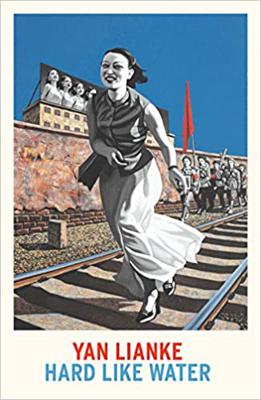
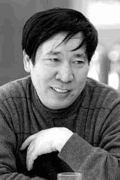
Biography: Reknowned Chinese novelist Yan Lianke was born in a remote and impoverished region of Song County, Henan Province in 1958. Since the inception of his writing career in 1978 at the age of twenty, he has produced an extensive body of work that ranges from novels, novellas and short fiction to essays and criticism.
His full-length novels include: The Dream of Ding Village (丁庄梦, Ding Zhuang Meng), a tale of the blood trade and subsequent Aids epidemic in a rural Henan village; The Joy of Living (Alt title: The Living, 受活, Shou Huo), a sweeping tale of the lives of disabled rural villagers from the Chinese Communist revolution through the years of reform and opening; The Sunlit Years (日光流年, Riguang Liunian); Solidity of Water (Alt title: Hard as Water, 坚硬如水, Jianying Ru Shui) and Serve the People (为人民服务, Wei Renmin Fuwu), which was banned in China and later translated into English, French and Japanese.
He has published ten collections of novellas and short stories: among them, the critically acclaimed Days, Months, Years (年月日, Nian Yue Ri), Song of the Plow (耙耧天歌, Palou Tiange) and a five-volume set of his collected works. He is a member of the Chinese Writers’ Association and the recipient of numerous literary awards, including the first and second Lu Xun Literary Prizes and the Lao She Award for literary excellence, awarded in recognition of his novel The Joy of Living (受活, Shou Huo), considered by many to be his master work.
Partial Bibliography:
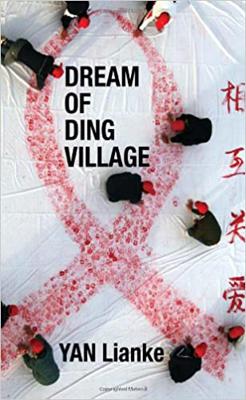
丁庄梦, Ding Zhuang Meng (Dream of Ding Village), Shanghai Art and Literature Press, January 2006.
没有边界的跨越, Meiyou Bianjie de Kuayue (There is No Crossing Borders), Yangtze Art and Literature Press, August 2005.
受活, Shouhuo (The Joy of Living), Chunfeng Art and Literature Press, January 2004.
最后一名女知青 Zuihou Yiming Nu Zhiqing (The Last Sent-down Girl), Shidai (Times) Art and Literature Press, September 2003.
潘金莲逃离西门镇, Pan Jinlian Taoli Ximenzhen (Pan Jinlian Flees West Gate Village), Shidai (Times) Art and Literature Press, August 2003.
夏日落, Xia Ri Luo (Summer Sunset), Chunfeng Art and Literature Press, January 2002.
日光流年, Riguang Liunian (The Sunlit Years), Shidai (Times) Art and Literature Press, October 2001.
坚硬如水, Jianying Ru Shui (Solidity of Water/Hard As Water), Yangtze Art and Literature Press, January 2001.
ESWN has a nice summary of articles about Yan, particularly about Dream of Ding Village.
Related:
Yan Lianke’s latest novel – a satirical take on the less-than-honourable behaviour of Beida and Tsinghua University professors – aroused a storm of protest from some of them. So I was looking forward to this week’s post-graduate seminar in the Beida Chinese Department, where Elegy and Academe was due to be discussed.
More…
By Nicky Harman, December 4, 5:02a.m.
Since early this year, I have been busy translating [Yan Lianke's] (/authors/yan-lianke/) novel Dream of Ding Village, a story of blood-selling and the subsequent AIDS epidemic in Henan province. In response to some of our readers who have expressed an interest in seeing more of Yan's fiction in translation, here is a brief (unedited) excerpt from the novel, which will be published by [Constable and Robinson] (/publishers/constable-and-robinson/) in 2009.
Although the excerpt is but a very small slice of a novel rich in language and ideas, it highlights the narrative approach Yan has chosen for this book: an admixture of surrealistic dream sequences, omniscient narration and the slightly naive first-person narration of a twelve-year-old boy who has been poisoned in retaliation for his father's activities as a blood merchant or "bloodhead". Balancing these various styles - various voices might be a better way to phrase it - has been my greatest translation challenge.
The sixth thing was that if you got it, you died. AIDS was a new and incurable disease, and no amount of money could save you. But the sickness had only just begun. That was the seventh thing. The real explosion wouldn't come until next year, or the year after next. That's when people would start dying like sparrows, or moths, or ants. Right now they were dying like dogs, and everyone knows that in this world, people care a lot more about dogs than they do about sparrows, moths or ants...
More…
By Cindy Carter, September 6, 12:28p.m.
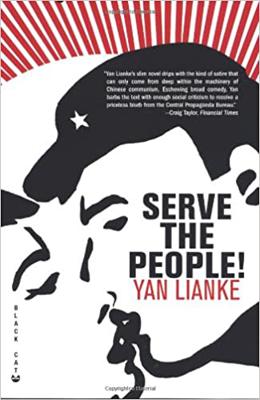
The Guardian's Hay festival coverage starts off with a big picture of Yan Lianke, looking like he's pretending he belongs there. The first of their excerpts from Hay-festival attendees comes from Julia Lovell's translation of his novel Serve the People. We're going to see if we can post some comments from Yan himself on the whole Hay experience, once he's back in China.
Edit: That picture seems to have been taken in China. He belongs there after all, guess that’s just his regular expression.
By Eric Abrahamsen, May 23, 6:33p.m.
The May 4, 2008 edition of the New York Times Book Review features reviews of four new translations of Chinese novels:
- Mo Yan’s Life and Death are Wearing Me Out, translated by Howard Goldblatt
- Jiang Rong’s Wolf Totem, translated by Howard Goldblatt
- Wang Anyi’s The Song of Everlasting Sorrow, translated by Michael Berry and Susan Chan Egan (includes chapter excerpt)
- Yan Lianke’s Serve the People, translated by Julia Lovell (includes chapter excerpt)
One interesting, and rather humbling, note: the two books translated by Howard Goldblatt total 1067 English language pages. 1067 pages, people. As someone who counts herself lucky, very lucky, to get through 1000 characters of literary translation per day, I can’t imagine how he does it and still manages to find time to sleep. Damn, I could have/should have/would have asked him that at the Moganshan translation seminar…
(Thanks to fellow-translator Bruce Humes for giving us the heads-up on these reviews.)
By Cindy Carter, May 6, 10a.m.
Yan Lianke is quite the interview subject! Australian paper The Age just ran a very long piece on Yan, which gives a wider window on his early development and attitudes towards writing than previous articles. He also mentions his current work in progress, possibly to be published next year:
The work in progress is an unflattering fable, "funny and ridiculous", about China's contemporary intellectuals, who Yan believes have been co-opted by the Government. "They lack the courage to face up to the real situation," he says.
Asked what the real situation is, he replies promptly: "Chaos. China is in chaos, politically, economically, medically, morally and some people are the beneficiaries of this chaos, including intellectuals. Those at the grassroots, the masses, are the ones suffering, but in facing this kind of situation Chinese intellectuals can't see clearly."
In the past, Yan says, there were great pressures on writers and it was understandable to some degree that people didn't dare speak out. But now, he says, there is no excuse. "Now it is a self-imposed censorship, so the situation is more tragic."
By Eric Abrahamsen, July 29, 6:54p.m.
A very interesting article in the Washington Post today brings up the damage censorship does to Chinese art, mostly via the example of Yan Lianke and his novels. The bulk of the article is given over to the mechanisms of censorship, and how Yan waters down his work to make it publishable, though I was excited to read this paragraph:
Yan's little compromise illustrates one of the most tragic aspects of the Communist Party censorship that is imposed on journalism and art in China. In many ways, the country's 1.3 billion people are being deprived of the full bloom of their culture, with thousands of artists like Yan forced to calculate how much they can get away with rather than cutting loose with their talent unfettered.
More…
By Eric Abrahamsen, July 10, 6:47p.m.
A very short translated excerpt from the first page of Yan Lianke's 2006 novel, Dream of Ding Village (丁庄梦). When he is at his best, Yan is an extraordinarily lyrical writer who uses rhyme, rhythm, repetition and cadence to great effect. The first chapter of Dream of Ding Village is a joy to read aloud in Chinese - musical and prose-poetic, it establishes the tone of the entire novel and introduces refrains that the author returns to again and again. I am not sure that I have done this justice in my translation, but it is a labor of love and a work in progress.
"A day in late autumn, a late autumn dusk, the dusk of a late autumn day. Because of the autumn, because of the dusk, the sun that sets above the East Henan plain bloods up into a ball, making red of earth and sky..."
More…
By Cindy Carter, June 12, 2:49a.m.