
Welcome back to the Cold Window Newsletter. In this issue, we approach the end of my 13 Ways of Looking at Chinese Internet Literature series with a close look at online fiction and systems of power in today’s China. Then, a few flash bulletins on this season’s literary awards and releases.
Thirteen ways of looking at Chinese internet literature: Fiction, identity, and the state (#9-11)
A lot of what I know about Chinese internet literature comes from conversations with friends who have been reading this stuff much longer than I have, and one common refrain I’ve heard has puzzled me since the very beginning. Friends often warn me that the approach to gender and identity in web fiction is regressive, lowest-common-denominator, unliterary. Before I’d read a word of online fiction, I’d heard classmates dismiss all female-oriented novels as 霸总文 (stories about “domineering CEOs,” an archetype for cold, dominant male love interests) and 后宫文 (“harem” stories, a typically male-oriented genre in which the protagonist collects or seduces an endless parade of women). If you flip through Megan Walsh’s chapter on internet fiction in The Subplot, or even just scroll down the front page of Webnovel, you’ll also find plenty of evidence for the disconcerting sexism of many of the most popular internet novels.
And yet feminist discourse is surging in ever other corner of Chinese popular culture that I interact with: books, movies, social media. Clearly, between an increasingly gender-aware youth culture on the one hand and the latent sexism of many internet genres on the other, all under a strictly heteronormative censorship regime, there are some rich contradictions to explore here. Let’s get into it.

Way #9: Internet literature as a vehicle for feminist identity formation
Internet literature may only have come of age at the beginning of this century, but that’s plenty long for it to have already gone through several generations of development in its portrayal of gender. The Chinese internet evolves fast, and that’s especially true when it comes to gender discourse. As a new fan entering in the 2020s, internet literature looks to me like a bewildering palimpsest of novels from different eras overlaid on one another, each bearing traces of the trends, gender norms, and censorship environment of when it was written.
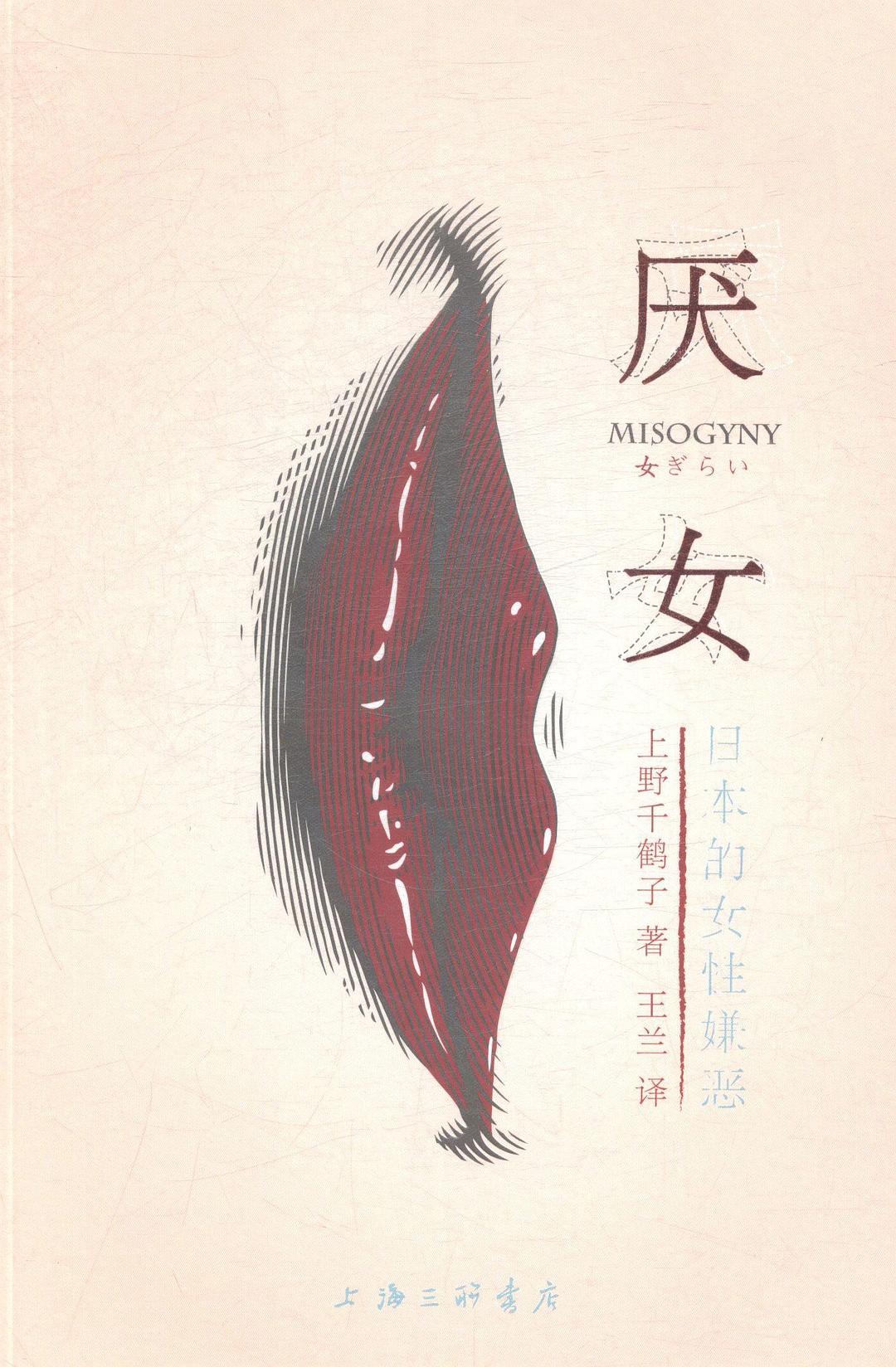
The Chinese translation of Misogyny 《厌女》, by Chizuko Ueno 上野千鹤子. Over 100,000 reviews on Douban!
Feminist internet novels have come a long way since the late 2000s and 2010s, when debates often revolved around purity culture in romance fiction and the contradictions of the 女尊 subgenre (“female supremacy,” stories set in fantasy worlds where women oppress men). In today’s literary market—where feminist discourse is increasingly mainstream and the Chinese translation of Chizuko Ueno’s Misogyny (《厌女》 in Chinese) has been a runaway bestseller for three years running—readers are now ready to turn a critical eye back on this earlier generation of female-oriented web fiction. A case in point is this 2022 Weibo post by the romance writer Ailan 哀蓝, which is worth quoting at length:
When some readers initially accused me of being “male-pleasing” and “misogynistic," I felt angry. I thought I loved the female protagonists in my stories—how could I possibly hate them? Besides, I am a woman myself. Could I possibly hate myself? But the more I reflected, the more I recognised the pervasive presence of my own misogyny. (……) Now, I realise that all the suffering I imposed on my female protagonists was meaningless because, after giving them these hardships, all I granted them was the “right to be loved by a man”. I didn’t allow them to grow or empower themselves; they were merely dolls dressed up by my pen.
Out of this new awareness has grown the “iFemale” 爱女 subgenre, which, like 女尊, again uses fantasy settings to imagine a world without patriarchy. The genre’s overt radicalism, categorical refusal to portray heterosexual romance or idealized male characters, and seemingly Marxist-inflected framework of gender liberation all make it worth reading about. Some of it has even been translated into English. The genre is new, and it’s far from mainstream, but it’s opening up imaginative space that didn’t exist even a few years ago. That’s what internet literature is supposed to do.
Way #10: Internet literature as a space for queer exploration
The question of whether internet fiction is homophobic is just as complex as whether it’s sexist. For instance, danmei (gay male romance typically written by women, for women) has faced accusations of homophobia for decades because it reflects female fantasy, implicitly (and sometimes explicitly) distancing itself from real-life gay identity. At the same time, danmei is by far the most widely accessible channel for depicting queerness on the Chinese internet, where queer communities are typically harshly suppressed. Danmei literature and its fandom have provided queer content a route toward normalization in Chinese popular culture, and some modern danmei authors even use this platform to provide education about queer life and queer intimacy, as this great article documents..
What’s more, queer exploration in internet fiction extends far beyond danmei. There’s baihe 百合, “girl’s love,” less of a commercial juggernaut than danmei but equally creative and diverse across its decades of history. There’s bianshen 变身, “body-switching,” in which the protagonist transmigrates into a body of a different gender, usually in a historical setting. There’s the aforementioned iFemale 爱女 subgenre, with its centering of lesbian relationships and its radical reimagining of femininity.
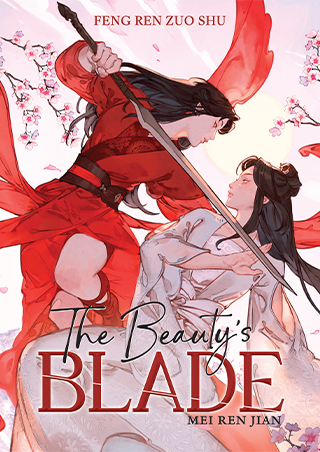
封刃作书《美人剑》(The Beauty’s Blade by Feng Ren Zuo Shu, 2025), the first baihe novel to get an English license. More on this at the end of the post.
So internet literature can be a badly needed avenue for queer exploration—when the censors allow it to be. Unfortunately, the trend in China in recent years has been precisely the opposite. Crackdowns on queer online content have become vastly more draconian than they were fifteen years ago, starting with an anti-pornography push targeting web novel platforms in 2014 and continuing through the arrest and imprisonment of danmei authors on obscenity charges as recently as last year. Notoriously, these arrests have resulted in prison sentences longer than those given to convicted rapists. And as long as queer fans have to encode their posts in cyphers or animal noises to avoid getting shadow-banned—as Chaoyang Trap wrote about in 2022—it seems unlikely that internet fiction will be able to realize its full potential as a tool for queer liberation.
Way #11: Internet literature as an uneasy dance with state power
Clearly, it’s dangerous to write internet novels. Even the big fish aren’t safe: MXTX, the danmei author whose novels have topped the New York Times bestseller list, was allegedly sentenced to three years in prison in 2019, her arrest kept secret for fear of adversely affecting the international popularity of the danmei-adapted TV series The Untamed. To a danmei reader, censorship and punishment are certainly the most salient symptoms of internet literature’s relationship with the government.
But if you read other genres, you might observe a very different image of the state. Nationalism is ubiquitous in many genres, from historical transmigration to science fiction. Examples of novels where transmigrated protagonists contributing to key moments in Communist Party history are too numerous to list: 《赤色黎明》 Red Dawn, 《穿越黑龙江1940》 Transmigrating to Heilongjiang 1940, 《六零年代大厂子弟》 State-Owned Factory Workers in the 1960s… In many cases, novels even indulge in patriotic historical revisionism, as Lina Qu points out in her study of the Cultural Revolution nostalgia transmigration subgenre.
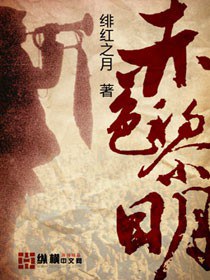
绯红之月《赤色黎明》(Red Dawn by Crimson Moon, 2013), a patriotic web novel set just before the founding of the Communist Party
Comment sections on Wuxiaworld and Webnovel are stuffed with frustrated English readers complaining about the sudden eruption of nationalist content halfway through their favorite translated novels. I get the frustration. But given how widespread nationalism is on the Chinese internet, I’m kind of glad that it’s getting translated. It can only be a good thing for this aspect, too, of contemporary Chinese cultural production to be demystified for international readers.
Thirteen ways of looking at Chinese internet literature: Fiction, identity, and the state (#9-11)
I’m already breezing past my self-imposed word limit for this post, so I’ll just wrap up with a few recent literary news items!
Liao Jing wins the Blancpain-Imaginist Literary Prize
The 2025 Blancpain-Imaginist Prize was awarded earlier this month, and, to no one’s great surprise, the winner was 《白露春分》 Spring Will Never Fall by 辽京 Liao Jing. Liao Jing is an increasingly important young author on the literary scene, so I’m bringing in a guest reviewer to chat with me about her work in a special issue on Substack later this month. Look forward to that in the next two weeks or so.
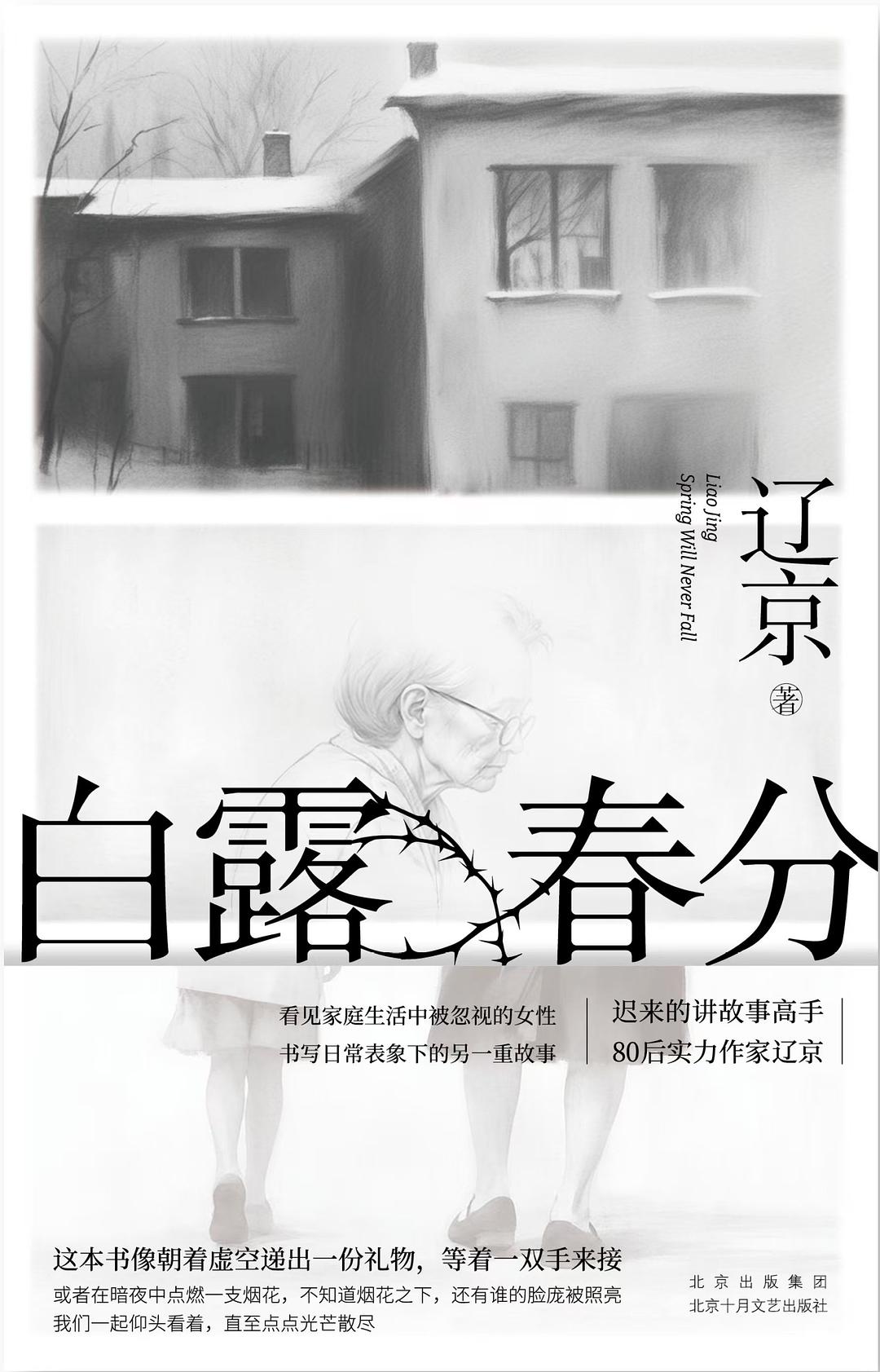
辽京《白露春分》(Spring Will Never Fall by Liao Jing, 2024)
Krasznahorkai in Jiangsu
Hungarian novelist László Krasznahorkai won the Nobel Prize in Literature last month, and the Chinese internet was largely enthusiastic. But curiously absent from the conversation was his 2004 book Destruction and Sorrow beneath the Heavens, an autofictional account of his travels through southern China in search of vestiges of classical culture. I was certain that his Nobel win would be enough of a push to get a Chinese translation of this book commissioned right away, but no news of one so far—maybe its blistering criticisms of post-Reform and Opening Up consumerism make it a no-go for Chinese publishers? Regardless, I strongly recommend the English translation by Ottilie Mulzet. László Stein, the book’s half-fictional narrator, can be an insufferable ass in his arrogant attitude toward China, but in his long, directly transcribed conversations with real Chinese poets like Xi Chuan 西川 and Ouyang Jianghe 欧阳江河, there’s wisdom to be found.
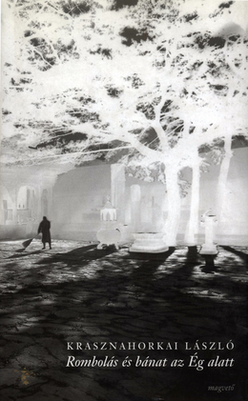
The Hungarian edition of László Krasznahorkai’s Destruction and Sorrow beneath the Heavens (2004).
New print runs of translated internet novels
Finally, big news in the translated internet fiction world: seemingly the first-ever English print runs of non-danmei Chinese internet novels (at least since The Grave Robbers’ Chronicles《盗墓笔记》 in 2011?) have now hit the shelves. Baihe made its print English debut with The Beauty’s Blade 《美人剑》 by Feng Ren Zuo Shu 封刃作书, out from Seven Seas Press. (No translator attribution? Thumbs down.) And, catching me off guard, Yen Press has released a print English version of the first volume of Lord of Mysteries 《诡秘之主》 by Cuttlefish That Loves Diving 爱潜水的乌贼, an internet literature classic and progenitor of the currently ascendant “Cthulhu” web genre. (Attributed as: “Translated by webnovel, edited by amixy.” Credit your translators, Yen Press!) Is the translation any good? I’ll keep you posted.
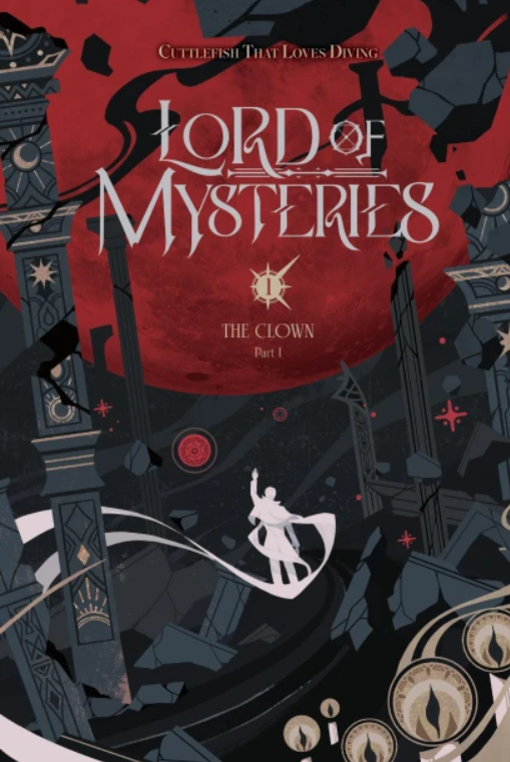
爱潜水的乌贼《诡秘之主》(Lord of Mysteries by Cuttlefish That Loves Diving)
That’s it for this issue! Look forward to a Liao Jing-focused special issue later this month before end-of-year list season begins. Thanks for reading.
Comments
There are no comments yet.