From March 5-19, 2010, the Beijing Bookworm will be holding its annual literary festival. During the same period, Bookworm locations in Chengdu and Suzhou will also be hosting authors, readings and events. Here's a tentative schedule for some Chinese authors who will be doing readings/Q&A sessions at the Beijing location (PLEASE NOTE that this is a TENTATIVE schedule - check Bookworm site for updates and ticket prices.)
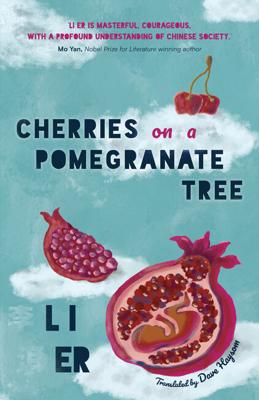
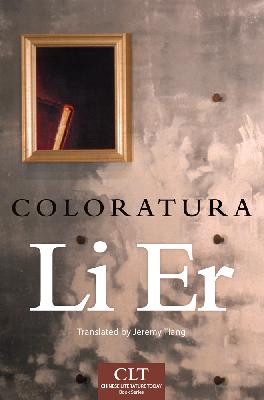
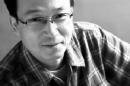
Sunday, March 7, 3 pm - Li Er - 李洱
Sunday, March 14, 6 pm - Yan Lianke - 阎连科
Monday, March 15, 7:30 pm - Bi Feiyu - 毕飞宇
Tuesday, March 16, 12:30 pm - Hong Ying - 虹影
Tuesday, March 16, 8:30 pm - Miao Wu and Xu Zechen - 徐则臣: Chinese Urban Fiction
By Cindy M. Carter, January 24, 3:45p.m.
The pre-dinner hour at Moganshan was often given over to talks and presentations by various course participants; the group leaders one evening, the writers the next. These presentations could be eye-opening in terms of the widely-varying approaches people take to this business – Bonnie McDougall and Howard Goldblatt, for instance. There was almost a kind of glee in the way Bonnie described her translations: leisurely, considered, I think she even described herself as spoiled in being able to pick and choose, freed by her position at the Chinese University in Hong Kong. Howard, on the other hand, was very much the harried professional man, and talked of funding and negotiations, work he'd taken to make the rent. Bonnie goes patiently from beginning to end; Howard generally starts somewhere in the middle and jumps around. Howard hates the second draft more than anything; Bonnie goes and reads a book until the aha! moment comes.
More…
By Eric Abrahamsen, April 7, 10:13p.m.
Today is day one of the Sino-British Literary Translation course. After a very raucous train ride from Beijing to Shanghai we boarded a four-hour bus to Moganshan (莫干山 – Ever-wet Mountain?) and here we are. It’s been a long day and I’m tired, but the general format of the course is this: there are twenty Chinese to English translators and twenty English to Chinese. Each group is split in half, and assigned to one of two authors: the English-Chinese folks got Hari Kunzru and Bernadine Evaristo, and we of the Chinese-English persuasion got Tie Ning (铁凝) and Li Er (李洱). That’s four groups of ten, each with their author, and also a moderator to keep things in hand. And then… we translate. Together. Line by consensual line. Given the crotchety personalities of the translators I know, it sounds highly dubious, but this is the model they use at the British Center for Literary Translation, and they say it works. At the very least we should get some lively arguments out of it, and there are enough fascinating people around to ensure a worthwhile week.
By Eric Abrahamsen, March 17, 8:58p.m.
Back in 1990, long before I had even begun studying Chinese, I remember Chalmers Johnson - in an undergraduate politics class about revolution, of all things - commenting that "the Chinese have a very scatological sense of humour." At the time, I had no reference point, no way of assessing the veracity of his claim, so I chalked it up to the amiable ramblings of a brilliant professor lulled to boredom by sleepy undergraduates, San Diego's balmy clime and the interminable weight of tenure.
Now, 17 years later, I find myself working on three excerpts by three very different Chinese authors - Yu Hua, Zhu Wen and Li Er - that have inspired me to revisit Chalmers Johnson's observation. In each of these passages, feces plays a starring role. While I'm in no mood to make generalizations about scatology or humour in China, this is marvelous excuse to introduce translations from a few favorite authors.
Yu Hua's Brothers
Protagonist Li ("Baldy") Guangtou sits atop his gold-plated toilet dreaming of his impending voyage into space on a Russian civilian shuttle and remembering his youth. Oh, the hazy crazy days of peeping at female asses through the partition of a public toilet...
Zhu Wen's What is Love and What is Garbage:
On the worst day of his life, protagonist Xiao Ding finds himself (1) the laughingstock of bar hostesses (2) a refugee who flees a bar only to enter the most ungodly toilet imaginable (3) a man without a shred of toilet paper (4) the butt of a prank by an unkind stranger standing at the urinals. On days like this, you might as well just call it quits...
Li Er's Truth and Variations:
While some might see Doctor Bai as a freak or a fetishist, he is in fact an expert in all things excremental: a scholar of shit, a doyen of dung, a professor of piddle, piss and poop. We say this with all due respect to his academic background, interests and credentials.
More…
By Cindy M. Carter, July 20, 10:15a.m.