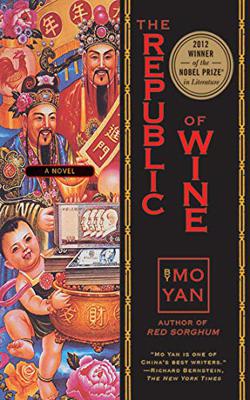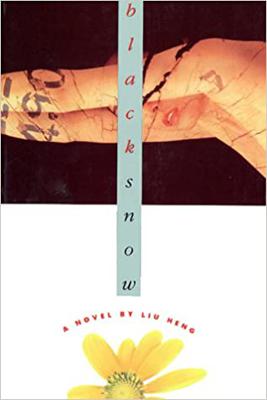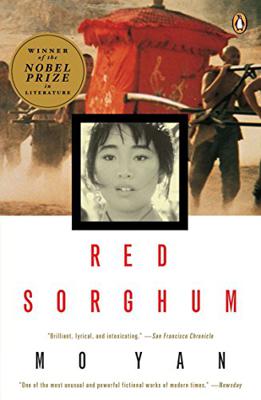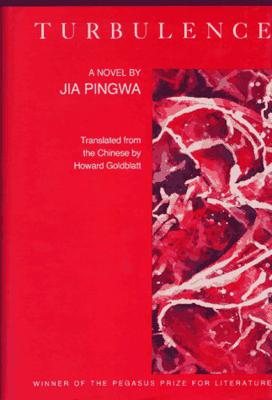
Howard Goldblatt has graciously allowed us to publish this essay of his on the openings of Chinese novels.
In the Beginning
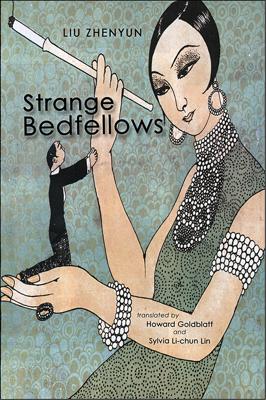
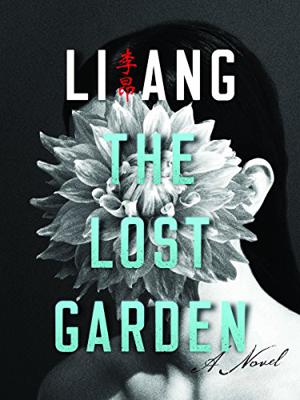
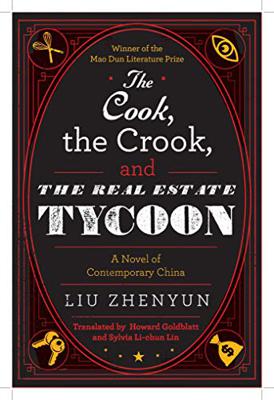
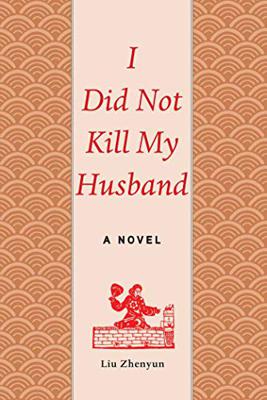
"Every summer Lin Kong returned to Goose Village to divorce his wife."
How could anyone not want to keep reading, at least for a while, with an opening line like that?
Or:
"I was born twice: first, as a baby girl, and then again, as a teenage boy."
Or, finally:
"'Sons of bitches.' Lituma felt the vomit rising in his throat. 'Kid, they really did a job on you.'"
From Melville to Tolstoy and beyond, all the way to Ha Jin, Jeffrey Eugenides, and Mario Vargas Llosa, novelists in the West have assumed that, like a flashy cover, an arresting opening line can go a long way toward starting those pages turning.
When he wrote…
"Lolita, light of my life, fire of my loins. My sin, my soul. Lo-lee-ta: the tip of the tongue taking a trip of three steps down the palate to tap, at three, on the teeth. Lo. Lee. Ta."
…Nabakov knew he'd get our attention.
We don't, however, see many opening sentences of that nature in novels written in Chinese. After more than thirty years of translating Chinese novels into English, I cannot readily call to mind any I've worked on that provide a riveting, provocative, even outlandish opening. That's not to say they don't exist, or that the rules aren't changing, as cultural globalization gains momentum; it's just that a different, and equally valid, narrative strategy, a more tradition-bound beginning has been the norm in recent decades. I've often wondered what that says about the contemporary Chinese novel. Beyond that, how do expectations and standards of enjoyment or acceptance between Chinese and Western readers of fiction differ?
More…
By Eric Abrahamsen, November 10, 2:32p.m.
The May 4, 2008 edition of the New York Times Book Review features reviews of four new translations of Chinese novels:
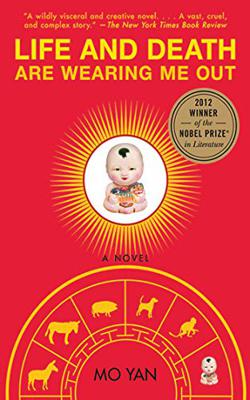
- Mo Yan’s Life and Death are Wearing Me Out, translated by Howard Goldblatt
- Jiang Rong’s Wolf Totem, translated by Howard Goldblatt
- Wang Anyi’s The Song of Everlasting Sorrow, translated by Michael Berry and Susan Chan Egan (includes chapter excerpt)
- Yan Lianke’s Serve the People, translated by Julia Lovell (includes chapter excerpt)
One interesting, and rather humbling, note: the two books translated by Howard Goldblatt total 1067 English language pages. 1067 pages, people. As someone who counts herself lucky, very lucky, to get through 1000 characters of literary translation per day, I can’t imagine how he does it and still manages to find time to sleep. Damn, I could have/should have/would have asked him that at the Moganshan translation seminar…
(Thanks to fellow-translator Bruce Humes for giving us the heads-up on these reviews.)
By Cindy Carter, May 6, 10a.m.
The arena: The second floor of the Baiyun Hotel, an enormous official meeting hall some of us have dubbed the Great Hall of the People, complete with velvet curtains, raised podium, and (apparently) refrigerated wooden chairs.
The contestants: Jiang Rong, author of Wolf Totem, and Howard Goldblatt, translator of that novel into English.
The grudge: Billed as a conversation between translator and translatee, the event was actually a chance for Jiang Rong to air his grievances about Howard Goldblatt’s translation. The two are actually pretty chummy, but neither was averse to a little dustup – Goldblatt started off by essentially leaning back, folding his arms, and saying “do your worst”.
More…
By Eric Abrahamsen, March 28, 12:58a.m.
The shortlist has been announced for the Man Asian Literary Prize: of the twenty-three names on the long list five have been selected, including Jiang Rong (Wolf Totem) from the home team. Xu Xi (Habit of a Foreign Sky) also counts, depending on your definition of, erm, the home team. Wolf Totem, translated by Howard Goldblatt, will be published by Penguin in March, 2008. The shortlist is as follows:
- Jose Dalisay Jr., Soledad’s Sister
- Reeti Gadekar, Families at Home
- Jiang Rong, Wolf Totem
- Nu Nu Yi Inwa, Smile As They Bow
- Xu Xi, Habit of a Foreign Sky
The winner will be announced in November.
By Eric Abrahamsen, October 26, 3:47a.m.
There's a lengthy interview with Howard Goldblatt posted on Full Tilt, a "journal of East-Asian poetry, translation and the arts" put out by the English Department of the National Central University in Taiwan. It's the longest interview with Goldblatt I've seen.
No, the thing that's really killing translation in our field is literalism. Too many translators are afraid of the text, especially when they're first starting out. And I understand that, because I was too. They're all afraid of the text. You need to overcome your fear of the text, put some distance between you and it.
Good advice! (via danwei)
By Eric Abrahamsen, July 23, 5:53p.m.