Western critics have expected Chinese authors to unambiguously answer political questions, to stake out their positions, to be in opposition to Mainland China's prevailing social order. Chinese books are mostly translated into English and published by university and academic presses to support Western ideological claims, and everybody stopped reading them a long time ago.
So, if I had to jot a list of reasons that Jia Pingwa has never really been translated into English in a major way... somewhere on that list, I'd note a cultural conservatism that doesn't appeal to Western readers of Chinese fiction, and I'd also list a general ideological subtlety. When Jia Pingwa's Turbulence dropped, it was met with kindhearted confusion, and reviews of it still resorted to calling it a critique of "the bureaucracy that hamstrings modern China." They had nothing else to say. Okay. What if Jia wrote a novel set during the Cultural Revolution?
Just like you've always wanted to hear Rod Stewart rip into "My Funny Valentine," there are those that are stoked to have, say, Mo Yan tear into the central government's family planning policy or have Jia Pingwa really get into the Cultural Revolution.
Jia's early writing, which is not very highly regarded (even by Sun Jianxi, really), is often set casually during the Cultural Revolution ("casually" because it's not the Cultural Revolution of Scar Literature or Western imagination). He has never really laid into the subject, as, I guess, he's been expected to. But... he has now.
More…
By Dylan Levi King, October 26 '10, 11:52p.m.
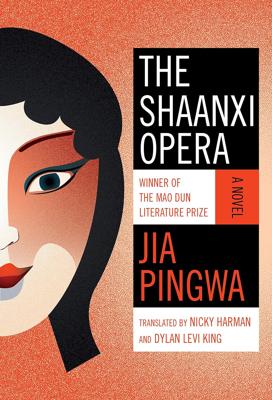
Jia Pingwa's novel Qin Qiang (The Writers Publishing House, 2005) won last year's Mao Dun Literary Prize and is another masterpiece by the prolific author, whose works are still mostly unknown and untranslated. What is there to appeal to translators and potential readers in the book? When are we going to see it in translation?
From the first half of the book, romance, rats and local politics in rural Shaanxi:
I still remember the rat that crawled out of the sewer. I raised him as a pet. He'd climb on the ceiling rafters and dance for me. After he was tired of dancing, he'd look down at me. His eyes were all pupil, dark black pupils that glinted with mischief. Cats knew not to venture close to my home. After my father died and I was left alone, nobody knew how I spent my time. But the rat knew. Each morning, I'd wake up and place three sticks of incense in front of the portrait of my deceased father, then sit down to write in my diary. In Qingfeng Jie, I was probably the only one who was writing away at a diary. From the incense burner, a ribbon of dark smoke slowly curled upward. It lengthened, reaching up to the rafters, where the rat watched me write. The rat thought it was a string and he leapt out, hoping to slide down it, to the table. Pow, he crashed down into the incense burner.
I've heard people say that rats are smart but they can be pretty dumb, too. This rat was rather fond of me, actually. But one of the reasons he stuck around for so long was because my house always had something to eat. I heard that last year when Mao Dan from Dong Jie got sick, he had to sell everything to pay the doctor bills. Every rodent that had previously made a home in his house escaped as soon as the food was gone. What I wanted to say is: this rat was civilized. He even chewed up the pages in my diary, the ones about Bai Xue. I looked at him in wonder, You know that I miss Bai Xue? Rat, if you can understand me, run to Bai Xue and tell her how I feel. He immediately took off to Xia Tianzhi's home and Bai Xue's bedroom. The rat climbed up and down the mosquito netting that was wrapped around her bed. Bai Xue looked up, "A little thief, eh?" She used an empty makeup box to trap the rat inside. The box still had a bit of foundation powder inside. With the powder spread over his fur, the rat pitifully squeaked, "Yin Sheng misses you! Yin Sheng misses you!" Bai Xue didn't understand what my rat trying to tell her.
After a while, the rat wandered into the main room of the house, where he found something else to chew on: one of Xia Tianzhi's scrolls of calligraphy. The one that my rat chose to chew had been scrawled by the director of the county's cultural research insitute. When Xia Tianzhi discovered the holes in the scroll, he shut up the windows and the doors and trapped my rat inside the room. He tossed the rat to the mute to look after. The mute carried the rat outside, doused the tiny body with kerosene, set it on fire and tossed it to run in the big courtyard in front of the theatre. The rat immediately burrowed into a heap of wheat straw. The straw immediately caught on fire.
More…
By Dylan Levi King, February 19 '10, 10:30p.m.
Yesterday's big news was the announcement of the republication of Ruined Capital by Jia Pingwa, one of the major novelistic works of the past few decades, and a perpetual lightning rod for controversy and criticism. The Writers Publishing House is doing the honors.
The book has for some years been under something like a soft ban: no new editions have come out for a while, and it was getting harder and harder to find a non-pirated version of the book. The 'controversy', based almost solely on the fact that there's sex in the book, was pretty silly from the beginning: it was an awfully prurient read when it came out in 1993, but the constitution of the modern Chinese reading public is highly fortified compared to what it used to be, and it's hard to imagine anyone really raising an eyebrow at the steamy scenes today.
More…
By Eric Abrahamsen, July 30 '09, 2:33a.m.
It's time once again for the Mao Dun literary prize, so dear to the official heart of the Chinese literary scene. Never mind that everyone whose opinion we respect snorts in disdain at the very mention of this prize (which is administered by the Writers Association) it's still a literary event.
To get the suspense out of the way, there were four winners of this year's prize, which considered full-length works of fiction published between 2002 and 2006: Jia Pingwa's Qinqiang (秦腔, Qin Opera), generally considered the 'big winner', Chi Zijian's E'erguna He You'an (额尔古纳河右岸, The Right Bank of the Arguna River), Zhou Daxin's Huguang Shanse (湖光山色, Pastorale) and Mai Jia's Ansuan (暗算, Plotting).
The official announcement of the prize is awfully Marxist (for once the low-hanging fruit can stay right where it is), but there have been other, more thoughtful responses on-line.
More…
By Eric Abrahamsen, October 30 '08, 3:17p.m.
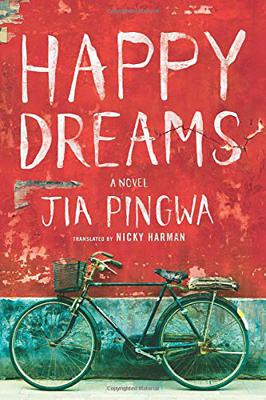
Joel Martinsen had an excellent post on Danwei yesterday about the new novel by Jia Pingwa, called Gaoxing (Happy). I haven't gotten around to picking up a copy, but I am halfway through Jia's previous masterpiece, Abandoned Capital, and absolutely loving it (more on that in the next week or two). Gaoxing is apparently the fictionalized life story of one of Jia's old childhood friends, and looks at first glance as though it might be similar to Jia's last novel, Qinqiang. We'll have to read it to see…
By Eric Abrahamsen, October 24 '07, 7:20p.m.